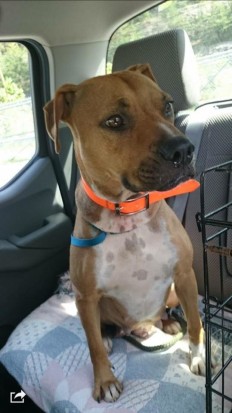
So feast your eyes upon me as I know I look pretty darn fly in my new bow tie !!! I just thought I'd treat you to a new pic of myself since I've taken a back seat to so many puppy mill issues. My adorable Magster indirectly gave this bow tie to me. Nice going Pie and of course DALE !!!
I'm Kind Of A Big Deal
This is a humorous blog written by Hudson who is Kind Of A Big Deal Boston Terrier. View the world through the eyes of Hudson. His objective of this blog is to educate the public by trying to teach them not to buy a dog through a puppy mill. Don't buy a dog before you see where his parents live and how they are treated.Better yet buy through a rescuer or shelter!
Friday, May 17, 2013
Pamela Baldwin of Samples Creek Kennel Is On The HSUS Horrible Hundred List and All Over The News.....
We can make a difference...please read and take 2 minutes and call this awful breeder and without profanity or anger let her know what you think of her business as we can use our voices to help. She is one of the HORRIBLE HUNDRED that HSUS just published. They printed a list of the 100 most problematic PUPPY MILLS in the United States and 23 were in MISSOURI.
Pamela Baldwin with Samples Creek Kennel on Problemed Breeder List Put Out By HSUS.......
If you choose to buy a dog from this kennel or women this is what you are contributing to. Are you comfortable with this ?
Pamela Baldwin/ Samples Creek Kennel – Edgar Springs, MO: “Excessively Thin” Dogs with Ribs Protruding
In May 2011, Pamela Baldwin received an Official Warning from the USDA for not providing proper veterinary treatment to dogs in her care. Issues included a dog known as “Skooter” who “had a swollen area on the left, lower lip” and two other dogs who “had cloudy substances covering a large portion of the eyes.” A “loose, bloody discharge” was also seen on the ground of one dog’s enclosure, according to inspection reports.
Problems at Samples Creek Kennel seem to have only gotten worse since the official warning was issued. In May 2012, USDA inspectors documented a number of new, serious problems, including four dogs who were so thin that their ribs were showing, and dogs with scabs, hair loss and missing fur. Issues were found yet again August of 2012, when USDA inspectors found a silky terrier with a damaged, watering eye and a limping Bassett Hound, as well as 25 dogs who were “scratching frequently” and appeared to be infested with fleas. USDA #43-A-4762.
Edward Cannon/ E. Cannon Kennels – Novinger, MO: Both a Puppy Mill and a Kitten Mill
E. Cannon Kennels has more than 400 dogs and puppies, according to February 2013 USDA records. It has been cited by USDA inspectors for multiple problems over the years, including a dog with dental issues so severe that she could no longer keep her tongue in her mouth and the inspector could see the roots of her teeth; an ammonia (urine) odor so strong that federal inspectors noted a “burning sensation” in their noses; dirty conditions; and mold found in the dog kibble. In 2011, E. Cannon Kennels received an official warning from the USDA for violations of the Animal Welfare Act regulations.
The facility was also breeding kittens when inspectors visited in July 2012, according to USDA records; 139 cats and kittens were counted in addition to 385 dogs and puppies. Issues with the cattery that have been documented by the USDA included a cat with a dark crusty discharge around both eyes, a flame-point Himalayan with clear mucus film in both eyes, accumulations of clutter, hair, dirt, and grime in the cattery, and a strong ammonia (urine) odor in the cat area. USDA #43-A-4206.
Samples Creek Kennel
(573) 435-6248
13220 County Road 6320, Edgar Springs, MO 65462-8434
Pamela Baldwin with Samples Creek Kennel on Problemed Breeder List Put Out By HSUS.......
If you choose to buy a dog from this kennel or women this is what you are contributing to. Are you comfortable with this ?
Pamela Baldwin/ Samples Creek Kennel – Edgar Springs, MO: “Excessively Thin” Dogs with Ribs Protruding
In May 2011, Pamela Baldwin received an Official Warning from the USDA for not providing proper veterinary treatment to dogs in her care. Issues included a dog known as “Skooter” who “had a swollen area on the left, lower lip” and two other dogs who “had cloudy substances covering a large portion of the eyes.” A “loose, bloody discharge” was also seen on the ground of one dog’s enclosure, according to inspection reports.
Problems at Samples Creek Kennel seem to have only gotten worse since the official warning was issued. In May 2012, USDA inspectors documented a number of new, serious problems, including four dogs who were so thin that their ribs were showing, and dogs with scabs, hair loss and missing fur. Issues were found yet again August of 2012, when USDA inspectors found a silky terrier with a damaged, watering eye and a limping Bassett Hound, as well as 25 dogs who were “scratching frequently” and appeared to be infested with fleas. USDA #43-A-4762.
Edward Cannon/ E. Cannon Kennels – Novinger, MO: Both a Puppy Mill and a Kitten Mill
E. Cannon Kennels has more than 400 dogs and puppies, according to February 2013 USDA records. It has been cited by USDA inspectors for multiple problems over the years, including a dog with dental issues so severe that she could no longer keep her tongue in her mouth and the inspector could see the roots of her teeth; an ammonia (urine) odor so strong that federal inspectors noted a “burning sensation” in their noses; dirty conditions; and mold found in the dog kibble. In 2011, E. Cannon Kennels received an official warning from the USDA for violations of the Animal Welfare Act regulations.
The facility was also breeding kittens when inspectors visited in July 2012, according to USDA records; 139 cats and kittens were counted in addition to 385 dogs and puppies. Issues with the cattery that have been documented by the USDA included a cat with a dark crusty discharge around both eyes, a flame-point Himalayan with clear mucus film in both eyes, accumulations of clutter, hair, dirt, and grime in the cattery, and a strong ammonia (urine) odor in the cat area. USDA #43-A-4206.
Samples Creek Kennel
(573) 435-6248
13220 County Road 6320, Edgar Springs, MO 65462-8434
Columbia, Missouri's No Kill Spay and Neutering Program......
COLUMBIA - Animal advocacy group No Kill Columbiahopes a new project will help save thousands of animals over the next few years. Established in January, No Kill Columbia's Spay Neuter Project aims to reduce animal overpopulation by creating a low-cost spay neuter clinic to serve the mid-Missouri area.
In the past four years, the Central Missouri Humane Society euthanized roughly 43 percent of all animals it took in, or 9,105 cats and dogs. No Kill Columbia hopes to reduce the kill rate to ten percent or less.
Melissa Kron, chair of The Spay Neuter Project, said she hopes the need for such a clinic declines over the next few years.
"We would love to see a day where we don't even have enough animals to fix. To where we get to the point where... so many animals are spayed and neutered that we don't have to worry about pet overpopulation," Kron said.
One mid-Missouri rescue shelter has seen this overpopulation firsthand. Megan Burnam, a board member of Second Chance, said the overcrowding of shelters is a constant issue.
"Overcrowding happens this time of year, it happens almost everyday. We get calls from up to five area shelters that we have worked with in the past, asking us to save animals that are going to die simply because they don't have a spot for them," Burnam said.
In addition to saving animals' lives, spaying and neutering also increases the health of both cats and dogs. Not only can it reduce aggression in male cats and dogs, but it can also decrease the risk of uterine and mammary cancer in females.
Kron contended spaying and neutering also benefits taxpayers.
"Stray animals are required to be held for seven days, so if animal control picks up an animal and has to feed, care for it and then put it to sleep, that's a complete waste of taxpayer money that could be spent on other things," Kron said.
In order to adhere to its mission of reducing pet populations, the group hopes to make spaying and neutering accessible for all mid-Missouri pet owners. The clinic said it will charge no more than $60 per dog and $40 per cat. The group also plans to provide a free shuttle service to surrounding mid-Missouri counties.
No Kill Columbia needs to raise roughly $105,000 to pay for start-up costs and renovations of its future facility in Columbia. Kron said PetSmart Charities will donate $85,000 in medical equipment. Once operating at full capacity, the clinic will be able to do between 33 and 35 surgeries per day, or about 8,000 per year.
Over the next few months, No Kill Columbia is hosting several fundraising events in hopes of reaching its goal of opening by the end of the year.
Monday, May 13, 2013
Pamela Baldwin with Samples Creek Kennel on Problemed Breeder List Put Out By HSUS.......
If you choose to buy a dog from this kennel or women this is what you are contributing to. Are you comfortable with this ?
Pamela Baldwin/ Samples Creek Kennel – Edgar Springs, MO: “Excessively Thin” Dogs with Ribs Protruding
In May 2011, Pamela Baldwin received an Official Warning from the USDA for not providing proper veterinary treatment to dogs in her care. Issues included a dog known as “Skooter” who “had a swollen area on the left, lower lip” and two other dogs who “had cloudy substances covering a large portion of the eyes.” A “loose, bloody discharge” was also seen on the ground of one dog’s enclosure, according to inspection reports.
Pamela Baldwin/ Samples Creek Kennel – Edgar Springs, MO: “Excessively Thin” Dogs with Ribs Protruding
In May 2011, Pamela Baldwin received an Official Warning from the USDA for not providing proper veterinary treatment to dogs in her care. Issues included a dog known as “Skooter” who “had a swollen area on the left, lower lip” and two other dogs who “had cloudy substances covering a large portion of the eyes.” A “loose, bloody discharge” was also seen on the ground of one dog’s enclosure, according to inspection reports.
Problems at Samples Creek Kennel seem to have only gotten worse since the official warning was issued. In May 2012, USDA inspectors documented a number of new, serious problems, including four dogs who were so thin that their ribs were showing, and dogs with scabs, hair loss and missing fur. Issues were found yet again August of 2012, when USDA inspectors found a silky terrier with a damaged, watering eye and a limping Bassett Hound, as well as 25 dogs who were “scratching frequently” and appeared to be infested with fleas. USDA #43-A-4762.
Edward Cannon/ E. Cannon Kennels – Novinger, MO: Both a Puppy Mill and a Kitten Mill
E. Cannon Kennels has more than 400 dogs and puppies, according to February 2013 USDA records. It has been cited by USDA inspectors for multiple problems over the years, including a dog with dental issues so severe that she could no longer keep her tongue in her mouth and the inspector could see the roots of her teeth; an ammonia (urine) odor so strong that federal inspectors noted a “burning sensation” in their noses; dirty conditions; and mold found in the dog kibble. In 2011, E. Cannon Kennels received an official warning from the USDA for violations of the Animal Welfare Act regulations.
The facility was also breeding kittens when inspectors visited in July 2012, according to USDA records; 139 cats and kittens were counted in addition to 385 dogs and puppies. Issues with the cattery that have been documented by the USDA included a cat with a dark crusty discharge around both eyes, a flame-point Himalayan with clear mucus film in both eyes, accumulations of clutter, hair, dirt, and grime in the cattery, and a strong ammonia (urine) odor in the cat area. USDA #43-A-4206.
Samples Creek Kennel
(573) 435-624813220 County Road 6320, Edgar Springs, MO 65462-8434
Saturday, May 11, 2013
USDA REQUESTS FUNDING TO
ENFORCE NEW RULES ON DOG BREEDERS
The Office of Budget and Management recently posted the Fiscal Year 2014 Budget for the U. S.
Department of Agriculture. OMB is reporting that USDA is “requesting funding to enforce the
Animal Welfare retail pet store rule, which closes a loophole of pets being sold over the Internet,
phone and by mail, that are currently exempt from the regulatory process. The requested funding
levels will help support these important regulatory efforts.”
USDA has also posted its FY 2014 Budget Summary and Annual Performance Plan. The USDA
reports that, “The 2014 Budget proposes $29 million for Animal Welfare activities. This
includes funding to fully implement the retail pet stores rule, which will offer welfare
protections to dogs and certain other animals sold as pets through non-traditional means."
USDA’s new rule will help regulate puppy mills that have simply ignored federal regulations on
how they raise and care for their animals by simply selling over the Internet as opposed to selling
to pet stores. Numerous investigations and exposes of inhumane Internet sellers have resulted in
this new rule change.
This new rule to regulate all large commercial dog breeders regardless of how they sell their
puppies is certainly welcome news. It is heartening to learn that USDA is seeking the funds to
enforce humane standards of care on puppy mills that sell over the Internet.
Thanks to those who submitted comments to USDA is support of these new rules. Your letters
and emails really do make a difference!
Friday, May 10, 2013
These Puppy MIllers In Our State Made The Just Published Humane Society 100 Problemed Puppy Mills In The United States
MISSOURI
Pamela Baldwin/ Samples Creek Kennel – Edgar Springs, MO: “Excessively Thin” Dogs with Ribs
Protruding
In May 2011, Pamela Baldwin received an Official Warning from the USDA for not providing proper veterinary treatment to dogs in her care. Issues included a dog known as “Skooter” who “had a swollen area on the left, lower lip” and two other dogs who “had cloudy substances covering a large portion of the eyes.” A “loose, bloody discharge” was also seen on the ground of one dog’s enclosure, according to inspection reports.
Problems at Samples Creek Kennel seem to have only gotten worse since the official warning was issued.
In May 2012, USDA inspectors documented a number of new, serious problems, including four dogs who
were so thin that their ribs were showing, and dogs with scabs, hair loss and missing fur. Issues were
found yet again August of 2012, when USDA inspectors found a silky terrier with a damaged, watering
eye and a limping Bassett Hound, as well as 25 dogs who were “scratching frequently” and appeared to
be infested with fleas. USDA #43-A-4762.
Edward Cannon/ E. Cannon Kennels – Novinger, MO: Both a Puppy Mill and a Kitten Mill
E. Cannon Kennels has more than 400 dogs and puppies, according to February 2013 USDA records. It
has been cited by USDA inspectors for multiple problems over the years, including a dog with dental
issues so severe that she could no longer keep her tongue in her mouth and the inspector could see the
roots of her teeth; an ammonia (urine) odor so strong that federal inspectors noted a “burning
sensation” in their noses; dirty conditions; and mold found in the dog kibble. In 2011, E. Cannon Kennels
received an official warning from the USDA for violations of the Animal Welfare Act regulations.
The facility was also breeding kittens when inspectors visited in July 2012, according to USDA records;
139 cats and kittens were counted in addition to 385 dogs and puppies. Issues with the cattery that
have been documented by the USDA included a cat with a dark crusty discharge around both eyes, a
flame-point Himalayan with clear mucus film in both eyes, accumulations of clutter, hair, dirt, and grime
in the cattery, and a strong ammonia (urine) odor in the cat area. USDA #43-A-4206.
Tina Carr/ Simply Puppies – Hannibal, MO: Dead Dog Found Outside in the Bitter Cold
Simply Puppies has accumulated numerous federal Animal Welfare Act violations over the last several
years, including a January 2013 violation for 22 puppies kept on one-inch wire flooring, which is an injury
and entrapment risk; February 2011 violations for failure to provide adequate bedding when it was 13.6
degrees F. outside; and one dog who was observed to be shivering with frozen water droplets on the
dog’s chin. In 2012, Carr received an official warning from the USDA for previous violations of the Animal
Welfare Act regulations. In January 2011, Carr was cited by USDA inspectors for a “direct non-
compliance” for a dead dog found by the inspector in a kennel with another dog. The report does not
specify how the dog died, but indicates that it may have been due to the bitter cold temperatures: “At
time of inspection a female Dachshund (#222) was found dead in an outdoor run with another live
dog. [....]the outdoor temperature was 28 degrees F. There were approximately 20 short-haired
Dachshunds that were in outdoor enclosures with no bedding available.” (USDA, Jan. 2011). USDA #43-
A-5672.
See The HSUS’s Dirty Dozen reports for details at humanesociety.org/puppymillresearch.
Brandi Cheney/ Circle B Farms, LLC – Huntsville, MO: Still Licensed by USDA after being linked to
Previously Shuttered Kennel No list of problematic kennels would be complete without
Circle B Farms, LLC, operated by Brandi Cheney. Cheney has been associated with several different business names and breeding operations in Missouri. A previous facility, S & S Family Puppies, which
was licensed to both Cheney and her mother, Diana Stephenson, was linked to more than 500 hundred
pages of USDA enforcement records, including violations for sick and injured dogs who had not been treated by a vet, dead or dying dogs found on the property, dogs without adequate protection from the
heat and cold, and more. S & S Family Puppies was finally shut down in May 2011, but Brandi continues to operate Circle B Farms, LLC (#43-B-3698), a second puppy mill in a different location. USDA inspections of Circle B Farms in 2011 uncovered a number of new, severe violations, including dogs in need of veterinary care, temperatures inside the kennel registering as high as 109.5 degrees F., failure to provide adequate lighting or electricity, and failure to provide adequate cage space. USDA #43-B-3698 and previous #43- B-0435.
The HSUS has also received consumer complaints about sick puppies sold by this operator. See the HSUS’s 2011 Dirty Dozen report update at www.humanesociety.org/puppymillresearch for more details.
Kimberly Coleman/ TLC’s Kennel – Clinton, MO: Fined $8,250 by USDA
TLC’s Kennel has more than 300 dogs and puppies, but USDA inspectors were not able to check on their welfare in January 2013, when the operator failed to make the facility available during regular business hours for inspection (a violation). Previous violations at the kennel include dogs in wet or freezing weather without adequate protection, including 37 dogs which the inspector noted had “soiled or wet hair coats,” and dogs kept in rusty enclosures with holes in the flooring, strong odors and flies throughout the facility. In 2010, the operator entered in to a settlement agreement with the USDA and was fined $8,250 for violations of the Animal Welfare Act regulations. USDA #43-A-4973.
Circle B Farms, LLC, operated by Brandi Cheney. Cheney has been associated with several different business names and breeding operations in Missouri. A previous facility, S & S Family Puppies, which
was licensed to both Cheney and her mother, Diana Stephenson, was linked to more than 500 hundred
pages of USDA enforcement records, including violations for sick and injured dogs who had not been treated by a vet, dead or dying dogs found on the property, dogs without adequate protection from the
heat and cold, and more. S & S Family Puppies was finally shut down in May 2011, but Brandi continues to operate Circle B Farms, LLC (#43-B-3698), a second puppy mill in a different location. USDA inspections of Circle B Farms in 2011 uncovered a number of new, severe violations, including dogs in need of veterinary care, temperatures inside the kennel registering as high as 109.5 degrees F., failure to provide adequate lighting or electricity, and failure to provide adequate cage space. USDA #43-B-3698 and previous #43- B-0435.
The HSUS has also received consumer complaints about sick puppies sold by this operator. See the HSUS’s 2011 Dirty Dozen report update at www.humanesociety.org/puppymillresearch for more details.
Kimberly Coleman/ TLC’s Kennel – Clinton, MO: Fined $8,250 by USDA
TLC’s Kennel has more than 300 dogs and puppies, but USDA inspectors were not able to check on their welfare in January 2013, when the operator failed to make the facility available during regular business hours for inspection (a violation). Previous violations at the kennel include dogs in wet or freezing weather without adequate protection, including 37 dogs which the inspector noted had “soiled or wet hair coats,” and dogs kept in rusty enclosures with holes in the flooring, strong odors and flies throughout the facility. In 2010, the operator entered in to a settlement agreement with the USDA and was fined $8,250 for violations of the Animal Welfare Act regulations. USDA #43-A-4973.
USDA inspectors photographed several severely matted and injured dogs at
a puppy mill co-owned by Brandi Cheney in 2008, and the facility soon
accumulated more than 500 pages of enforcement records. The puppy mill
was shut down in 2011, but Cheney now operates a different puppy mill
under a new limited liability corporation in Huntsville, MO. /USDA 2
Lou Cox/ Lou’s Country Kennel – Chillicothe, MO: Dogs with Ribs Protruding; Animals Outside in 23 Degree Weather
After accumulating dozens of pages of severe USDA violations between 1993 and 2012, and appearing in
the HSUS’s Missouri’s Dirty Dozen update report (at www.humanesociety.org/puppymillresearch) in
2011, this kennel cancelled its USDA license for unknown reasons in March 2012. Unfortunately, that
was not the end of the story, as the kennel remains state-licensed in Missouri in 2013. Horrific violations
at this kennel documented by federal inspectors included: dogs with painful eye conditions who had not
been treated by a vet despite repeat warnings; a seriously underweight mother Rottweiler with her rib
and hip bones protruding, who had only two surviving puppies out of a litter of six, a dog who was so
badly matted that the inspector could not see her eyes, and dogs “shivering in a crouched position” in
23 degree F temperatures. Inspectors also noted during one visit that the drinking water was frozen in
all of the outdoor kennels.
Marsha Cox/ Mar-Don Kennel – Chillicothe, MO: Surfaces Covered in Feces; Dogs in Below
Freezing Cold
Marsha Cox, a relative of Lou
Cox, was named as one of
our original Missouri’s Dirty
Dozen in a 2010 report on
some of the worst puppy
mills in Missouri [See HSUS’s
2010 and 2011 Dirty Dozen
reports for details.]
Marsha Cox’s USDA license was cancelled in 2011 after she repeatedly refused access to inspectors and was cited for severe animal care problems, including keeping animals outside in below- freezing temperatures without adequate protection from the cold, underweight
animals, and sick animals
who had not been treated by
a vet. Although Marsha Cox
has lost her USDA license, she
remains Missouri state
licensed in 2013.
USDA inspectors repeatedly found dogs at Marsha Cox’s Mar-Don Kennel
outside in the cold without adequate protection from extreme temperatures.
The USDA revoked her federal license in 2011 but the state continues to allow
her to operate in 2013. /The HSUS 2010
Kenneth Dake/ Dake’s Kennel – Dixon, MO : Accumulations of Trash and Waste
Dake’s Kennel has been cited for recurring violations since at least 2007. In December 2012, USDA
inspectors found 10 violations, including a Golden Retriever with sores inside her ears, excessive
accumulations of trash and waste, unsafe housing, and dogs without adequate protection from the
weather when temperatures had been in the 30s at night. Prior violations include storing rat poison two
feet away from the dog food, puppies found huddling together in a whelping trailer that was only 42
degrees F at the time of inspection, failure to provide adequate protection to dogs in the outdoor
enclosures when the outdoor temperature was 34 degrees F at time of inspection, and excessive
accumulations of feces. Dake’s Kennel received an official warning from the USDA in 2011 for violations
of the Animal Welfare Act regulations. USDA # 43-A-5402.
LeRoy Detweiler/ Sunset Ridge Kennel – Princeton, MO: “Thin and Listless” Dog Died of Sepsis;
Dogs Exposed to Heat Index over 114 Degrees F
Joseph and LeRoy Detweiler had a history of problems under their joint USDA license (#43-A-5447),
including an official warning in 2012, but in January 2013 the USDA allowed the Detweilers to cancel the
joint license and granted LeRoy Detweiler a new license, USDA #43-A-5786, at the same address.
Violations from the Detweilers’ USDA reports include a lethargic and shivering mother Chihuahua with only one surviving puppy, sick and lethargic puppies lacking veterinary care, a “high death rate” in puppy litters (July 2010), repeated problems with excessive accumulations of feces, dogs kept in unsafe temperatures, including a heat index of 114.1 degrees F in one of the buildings, and many other problems.
Grave problems have been found by state inspectors as well. In May 2012, a Missouri state inspector visited the kennel and found a gravely ill dog. Wrote the inspector: “there is a King Charles Cavalier, dog number 406 that is thin and listless [...] This dog is not trying to stand up. The licensee is keeping a list of dogs that have been treated or that have been seen by the attending veterinarian. Dog 406 is not on that list.” The inspector updated the report five days later, noting that the dog had died after the licensee was required to take him to the vet: “The licensee took the dog immediately to Dr. Alumbaugh. Dr. Alumbaugh put the dog on IVs as soon as it got there. The dog died 2 hours later. The necropsy
show[ed] that the intestine had adhered together, causing [...] septic death.”
Miriam and Neal Feldkamp—Lewistown, MO: Injured Dogs in Need of Vet Care; Puppies Coated in
The USDA has found recurring violations at the Feldkamp facility as recently as January 2013, when the kennel was cited for three repeat violations, including a veterinary care violation for two dogs with untreated injuries: a shih tzu with an open, oozing lesion and a dachshund who was limping and had a swollen lower leg. Additional issues found at the same inspection included an excessive build-up of feces; when questioned, the licensee told the inspector that “she cleans the outside portions of the enclosures about once a week” but regulations require that enclosures be spot cleaned daily.
The kennel has also repeatedly been cited for puppies, some as young as three days old, who were found with their feet falling through the wire flooring, a significant risk for entrapment and injury and a violation of both USDA and state regulations.
Violations from the Detweilers’ USDA reports include a lethargic and shivering mother Chihuahua with only one surviving puppy, sick and lethargic puppies lacking veterinary care, a “high death rate” in puppy litters (July 2010), repeated problems with excessive accumulations of feces, dogs kept in unsafe temperatures, including a heat index of 114.1 degrees F in one of the buildings, and many other problems.
Grave problems have been found by state inspectors as well. In May 2012, a Missouri state inspector visited the kennel and found a gravely ill dog. Wrote the inspector: “there is a King Charles Cavalier, dog number 406 that is thin and listless [...] This dog is not trying to stand up. The licensee is keeping a list of dogs that have been treated or that have been seen by the attending veterinarian. Dog 406 is not on that list.” The inspector updated the report five days later, noting that the dog had died after the licensee was required to take him to the vet: “The licensee took the dog immediately to Dr. Alumbaugh. Dr. Alumbaugh put the dog on IVs as soon as it got there. The dog died 2 hours later. The necropsy
show[ed] that the intestine had adhered together, causing [...] septic death.”
Miriam and Neal Feldkamp—Lewistown, MO: Injured Dogs in Need of Vet Care; Puppies Coated in
The USDA has found recurring violations at the Feldkamp facility as recently as January 2013, when the kennel was cited for three repeat violations, including a veterinary care violation for two dogs with untreated injuries: a shih tzu with an open, oozing lesion and a dachshund who was limping and had a swollen lower leg. Additional issues found at the same inspection included an excessive build-up of feces; when questioned, the licensee told the inspector that “she cleans the outside portions of the enclosures about once a week” but regulations require that enclosures be spot cleaned daily.
The kennel has also repeatedly been cited for puppies, some as young as three days old, who were found with their feet falling through the wire flooring, a significant risk for entrapment and injury and a violation of both USDA and state regulations.
In September 2012, USDA inspectors found whelping areas so filthy that a litter of shih tzu puppies had
“coats that were soiled with a brown grimy organic material,” and in April 2012, USDA inspectors found
that no vet had been to the facility in almost two years. USDA #43-A-3036.
Mary Foster and Cathy Griesbauer/ Country Pets – Montgomery City, MO: Extremely Thin Dog
and Reports of Sick Puppies; Co-Owner was Head of Professional Pet Association
The HSUS has received numerous complaints alleging sick puppies purchased from pet stores who
originated from Country Pets, an enormous puppy mill which houses more than 750 dogs and puppies.
The kennel received an official warning from the USDA in September 2012 for failure to provide
veterinary care and failing to allow access to inspectors on four prior occasions.
During Country Pets’ most recent federal inspection in August 2012, after twice finding no one present
when inspectors arrived to attempt an inspection, USDA inspectors found several dogs in urgent need of
veterinary care, including a Shih Tzu with a lesion on her eye who was squinting and blinking, a Bichon
with a mass in her mouth, and a weimaraner who was seriously underweight, with his “rib, spine, hip
bones, sit bones, and long bones all prominent and easily visualized from a distance.” None of the
animals had been examined by a vet, according to the inspection report. During a 2011 visit, USDA
inspectors found additional problems, including dogs in need of veterinary care, dogs found panting in
excessive heat, and housing in such disrepair that dogs’ legs were falling through the flooring.
One of Country Pets’ co-owners, Cathy Griesbauer, has been linked to numerous efforts to defeat
animal protection laws. She was the President of the Professional Pet Association in Missouri in 2010;
the PPA actively fought the passage of Proposition B, a ballot initiative designed to improve the care of
dogs in puppy mills. USDA #43-A-1843.
Rhonda Gear/ Country Babies – Galt, MO: Dogs without Shelter in 20 Degree Temperatures,
Buildings Not Cleaned in Months
Country Babies was listed in the HSUS’s Dirty Dozen reports in 2010 and 2011 (see
www.humanesociety.org/puppymillresearch) due to severe ongoing animal care violations, but is still in
operation in 2013. The facility has accumulated numerous ongoing violations, including repeat violations
for dogs with untreated medical issues, failure to provide adequate shelter to the dogs, filthy conditions,
rodent infestation, and more.
At press time, USDA public records show that the agency may be in the process of revoking Country Babies’s USDA license. The full complaint highlighting many violations cited over the years can be found at http://www.aphis.usda.gov/foia/enforcement_actions/2012/September/Animal%20Welfare%20Act%20 (AWA)/Complaints/MO10047-AC%20Rhoda%20Louise%20Gear%20Complaint_Redacted.pdf
Even if Gear’s USDA license is revoked, The HSUS has concerns that the dealer will remain licensed with the Missouri Department of Agriculture (MDA) and continue selling directly to the public, as have so many others in the state (Marsha Cox, Lou Cox, Wendy Laymon). The HSUS has urged the USDA and MDA to ensure that, if this dealer is permanently shut down, the dogs should be transferred to reputable shelters and rescue groups to receive proper care. USDA #43-B-3613.
Beverly Hargis/Hargis’ Sunshines Kennel – Hallsville, MO: Injured and Limping Dogs
At press time, USDA public records show that the agency may be in the process of revoking Country Babies’s USDA license. The full complaint highlighting many violations cited over the years can be found at http://www.aphis.usda.gov/foia/enforcement_actions/2012/September/Animal%20Welfare%20Act%20 (AWA)/Complaints/MO10047-AC%20Rhoda%20Louise%20Gear%20Complaint_Redacted.pdf
Even if Gear’s USDA license is revoked, The HSUS has concerns that the dealer will remain licensed with the Missouri Department of Agriculture (MDA) and continue selling directly to the public, as have so many others in the state (Marsha Cox, Lou Cox, Wendy Laymon). The HSUS has urged the USDA and MDA to ensure that, if this dealer is permanently shut down, the dogs should be transferred to reputable shelters and rescue groups to receive proper care. USDA #43-B-3613.
Beverly Hargis/Hargis’ Sunshines Kennel – Hallsville, MO: Injured and Limping Dogs
Hargis’ Sunshines Kennel has been cited for multiple USDA violations over the years, including numerous
dogs who were matted and dirty and in need of medical care, dogs who were limping due to untreated
injuries, dogs without adequate protection from the cold, a “strong ammonia odor,” and housing and
sanitation problems. In January 2012, Hargis’ Sunshines Kennel received an official warning from the
USDA for violating the Animal Welfare Act regulations. Nevertheless, as documented at its most recent
USDA inspection in November 2012, serious issues continued. The kennel was cited for having dogs with
inadequate cage space, excessive feces in some of the enclosures, to the point where some of the dogs
could not walk without stepping in their feces, and a foul odor. In addition to being licensed to sell to
pet stores, the kennel also sells puppies online via puppyfind.com. USDA # 43-A-0209.
Renee Horton/ Horton Kennel – Curryville, MO: Dogs Walking in Diarrhea
In March 2012, after attempting to perform an inspection on three prior occasions and being denied
access, USDA inspectors finally entered Horton Kennel for an inspection. They found a Boxer with two
masses which had not been evaluated by a vet, a Cocker Spaniel with yellow-green discharge around her eye which had not been treated by a vet, a large hole in the flooring of one enclosure filled with a murky
brown liquid, and dogs without adequate shade who were panting in the sun.
Additional violations found at the facility in recent years include a fly infestation, multiple dogs found
stepping in their own diarrhea; other dogs with untreated medical issues such as masses and ear
problems; and a dog who was matted so severely over 60% of her body that her fur was “heavily twisted
and ropey,” per USDA inspectors. USDA #43-A-2675.
Wilma Jinson/ Jinson Kennel – Stella, MO: “Obvious Veterinary Care Problems” per USDA
Inspector; Fined by USDA
In December 2012, Jinson Kennel was cited for a number of USDA violations, including an emaciated
Miniature Pincher who was so thin that “each of her vertebrae could be seen,” and a bulldog with a paw
injury so swollen that “the tissue had split in the middle and was draining,” which the inspector noted
“can be painful and can indicate infection.” Similar problems at Jinson Kennel have been longstanding.
As previously described in The HSUS’s Dirty Dozen update report in March 2011
(http://www.humanesociety.org/assets/pdfs/pets/puppy_mills/missouris_dirty_dozen_update.pdf),
this breeder is still in operation despite many violations for filthy conditions, sick and injured animals,
and direct non-compliance with USDA standards of care.
In December 2010, Jinson was cited by federal inspectors for a “direct non-compliance” for several dogs with untreated medical issues, including a dog with red, swollen paws and a dog whose leg was “swollen and bent at an unusual angle.” When asked about the dog with the “bent” leg, the licensee told the inspector that “she was a climber and she fell,” but she had not had the dog treated for the obvious injury. The kennel was also cited for housing in disrepair, failure to provide the dogs and puppies with adequate shelter from the elements, puppies with their feet passing through the wire flooring, and dirty water receptacles.
In September 2010, the USDA issued Jinson an Official Warning for “failure to establish and maintain an effective program for the control of insects, external parasites affecting dogs, and [control of] birds and mammals that are pests” at the facility.
In July 2010, Missouri state department of agriculture inspectors found a whelping building that “is rotting and smells of mold,” a fly infestation, and dogs exposed to contaminated washdown runoff, among other issues.
Additional violations go back to at least 2007. The HSUS has also received complaints from several people who allegedly purchased sick puppies from Jinson Kennel. USDA #43-A-2656.
Wendy Laymon/ Shadow Mountain Kennel – Rogersville, MO: Banned from USDA, Yet Still Licensed in Missouri after Numerous State Violations
As reported in our 2010 and 2011 Dirty Dozen reports, on March 27, 2009 the USDA levied action against Wendy Laymon (dba Shadow Mountain Kennel) under docket #08-0089: http://www.da.usda.gov/oaljdecisions/090403_AWA-08-0089.pdf for multiple violations of the Animal Welfare Act. She was fined $7,125 (held in abeyance) and banned from holding a USDA license for three years, yet Laymon continues to be licensed by the state of Missouri in 2013, allowing her to sell puppies directly to the public and online.
In December 2010, Jinson was cited by federal inspectors for a “direct non-compliance” for several dogs with untreated medical issues, including a dog with red, swollen paws and a dog whose leg was “swollen and bent at an unusual angle.” When asked about the dog with the “bent” leg, the licensee told the inspector that “she was a climber and she fell,” but she had not had the dog treated for the obvious injury. The kennel was also cited for housing in disrepair, failure to provide the dogs and puppies with adequate shelter from the elements, puppies with their feet passing through the wire flooring, and dirty water receptacles.
In September 2010, the USDA issued Jinson an Official Warning for “failure to establish and maintain an effective program for the control of insects, external parasites affecting dogs, and [control of] birds and mammals that are pests” at the facility.
In July 2010, Missouri state department of agriculture inspectors found a whelping building that “is rotting and smells of mold,” a fly infestation, and dogs exposed to contaminated washdown runoff, among other issues.
Additional violations go back to at least 2007. The HSUS has also received complaints from several people who allegedly purchased sick puppies from Jinson Kennel. USDA #43-A-2656.
Wendy Laymon/ Shadow Mountain Kennel – Rogersville, MO: Banned from USDA, Yet Still Licensed in Missouri after Numerous State Violations
As reported in our 2010 and 2011 Dirty Dozen reports, on March 27, 2009 the USDA levied action against Wendy Laymon (dba Shadow Mountain Kennel) under docket #08-0089: http://www.da.usda.gov/oaljdecisions/090403_AWA-08-0089.pdf for multiple violations of the Animal Welfare Act. She was fined $7,125 (held in abeyance) and banned from holding a USDA license for three years, yet Laymon continues to be licensed by the state of Missouri in 2013, allowing her to sell puppies directly to the public and online.
Jeff Burnside of Washington’s KOMO 4 News expanded upon the Laymon story in February 2013,
reporting that consumers across the country were still claiming to receive sick puppies from the facility
thanks to unregulated Internet sales: http://www.komonews.com/news/local/Loophole-lets-accused-
puppy-mill-operator-sell-dogs-online-192901401.html.
Rose Marlow/ Pet Degree Ranch – Wellsville, MO: Received Official Warning for Violating Animal
Welfare Act Regulations
In January 2012, Marlow received an Official Warning from the USDA for violating federal regulations
due to conditions at Pet Degree Ranch. The warning listed 19 violations pertaining to housing/facilities
and four violations pertaining to veterinary care between December 2010 and December 2011. But the
violations did not stop after Pet Degree Ranch received the warning. From January 2012 to March 2013,
USDA inspectors recorded 17 violations pertaining to housing/facilities and one violation pertaining to
veterinary care. Specific examples of repeated violations include dogs without adequate protection from
the wind and rain; expired infant medication kept in kennel area as if used on dogs; outdoor housing for
numerous dogs who had no bedding or other way of preserving their body heat when temperatures
dropped below 35 degrees F; sharp and rusted parts of the kennel that were a danger to the dogs; and
sick animals who had not been treated by a vet. USDA #43-A-4368.
Tom Nelson/ Oak Ridge Pets – Macon, MO: Dogs with Fresh Bite Wounds
USDA inspectors have repeatedly cited Oak Ridge Pets for dogs in need of veterinary care, including
dogs with oozing eyes, lesions, and lameness. In November 2012, a USDA inspector found two dogs with
eye problems so noticeable that “a yellowish build up” covered the entire eye, and other dogs with fresh
bite wounds. The licensee told the inspector that eight dogs had died over the last several months due
to “fighting.” In March 2010, puppies were found with their “feet and legs dangling” from gaps in the
wire flooring and the operator was found to be repeatedly keeping animals in cages that were too small.
USDA #43-B-3425.
Joe Overlease/ C & J’s Cockers – Miller, MO: Multiple Consumer Complaints and Many State
Violations
The HSUS has received a number of consumer complaints alleging sick puppies sold by C & J’s Cockers, which sells cocker spaniels online and directly to the public. The kennel is not USDA licensed so it can’t legally sell to pet stores, but it sells puppies via its own website, Cocker-spaniels.com, and online classified sites such as Nextdaypets.com.
Between May 2010 and February 2012, Missouri Department of Agriculture officials cited the puppy mill for a number of violations, including overcrowded and dirty conditions, safety concerns, dozens of matted dogs (1/26/2011), no proof of veterinary care (2/7/2012), and unsafe housing conditions (multiple dates). State records indicate that there are currently more than 300 dogs and puppies at the kennel.
The facility is owned by Joe Overlease, former president of the Professional Kennel Club of Missouri. Overlease was a vocal opponent of Proposition B, a 2010 ballot initiative that would have vastly improved the standards of care for dogs in commercial kennels in Missouri. Overlease’s kennel has been state-licensed since November 2003, after state officials found him operating an illegal, unlicensed kennel and required him to obtain a license.
The HSUS has received a number of consumer complaints alleging sick puppies sold by C & J’s Cockers, which sells cocker spaniels online and directly to the public. The kennel is not USDA licensed so it can’t legally sell to pet stores, but it sells puppies via its own website, Cocker-spaniels.com, and online classified sites such as Nextdaypets.com.
Between May 2010 and February 2012, Missouri Department of Agriculture officials cited the puppy mill for a number of violations, including overcrowded and dirty conditions, safety concerns, dozens of matted dogs (1/26/2011), no proof of veterinary care (2/7/2012), and unsafe housing conditions (multiple dates). State records indicate that there are currently more than 300 dogs and puppies at the kennel.
The facility is owned by Joe Overlease, former president of the Professional Kennel Club of Missouri. Overlease was a vocal opponent of Proposition B, a 2010 ballot initiative that would have vastly improved the standards of care for dogs in commercial kennels in Missouri. Overlease’s kennel has been state-licensed since November 2003, after state officials found him operating an illegal, unlicensed kennel and required him to obtain a license.
Overlease’s current website contains misinformation about adoption and shelter pets, advising readers
who are considering adopting a dog from a shelter that “You should have a good insurance policy that
covers animal attacks on your neighbors and visitors. And you also need to make sure your children and
grandchildren or others are closely supervised.” Overlease goes on to state that adopting instead of
buying a puppy “can become a very expensive nightmare in the long run.” Complaints received by The
HSUS indicate that purchasing puppies from puppy mills has become an expensive nightmare for many
buyers.
Valente Rios/ Rios Kennel – Galt, MO: Dogs in Complete Darkness; Failure to Obtain Vet Care
Inspection reports show there are more than 300 dogs and puppies at Rios Kennel. The puppy mill has
been cited for numerous USDA violations, some as recent as January 2013, for injured dogs who had not
been treated by a vet, filthy conditions, inadequate space, and ammonia levels in a windowless
whelping building so strong that inspectors’ noses “began burning and then started running,” according
to USDA inspection reports.
Additional USDA violations included limping dogs with swollen feet, animals with so much feces in their enclosures that they had difficulty walking without stepping in it, and dogs caged in a windowless building in “nearly pitch black” conditions without access to the outdoors or adequate light.
Missouri state inspectors have found additional problems at the facility as recently as March 2012, when an inspector found dogs who did not have water and a Yorkie with an eye problem that had not been treated. USDA #43-A-5652.
Donald Schrage/ Rabbit Ridge Kennel – Edina, MO: Starving Dogs, Open Wounds, Performed Surgery on Puppy without a License in Filthy Conditions
Donald Schrage’s Rabbit Ridge Kennel has been cited for severe, repeat Animal Welfare Act violations for many years in a row, including violations as horrific as performing surgeries on his own dogs in filthy conditions; emaciated animals with their ribs, vertebrae and hip bones protruding; dogs with crusty eyes, scabs and lesions; dogs in excessive heat without adequate air flow, and a dog with an untreatable tumor. During one visit, USDA inspectors noted the kennel had only one full-time employee and one part-time employee to care for more than 300 animals.
Additional USDA violations included limping dogs with swollen feet, animals with so much feces in their enclosures that they had difficulty walking without stepping in it, and dogs caged in a windowless building in “nearly pitch black” conditions without access to the outdoors or adequate light.
Missouri state inspectors have found additional problems at the facility as recently as March 2012, when an inspector found dogs who did not have water and a Yorkie with an eye problem that had not been treated. USDA #43-A-5652.
Donald Schrage/ Rabbit Ridge Kennel – Edina, MO: Starving Dogs, Open Wounds, Performed Surgery on Puppy without a License in Filthy Conditions
Donald Schrage’s Rabbit Ridge Kennel has been cited for severe, repeat Animal Welfare Act violations for many years in a row, including violations as horrific as performing surgeries on his own dogs in filthy conditions; emaciated animals with their ribs, vertebrae and hip bones protruding; dogs with crusty eyes, scabs and lesions; dogs in excessive heat without adequate air flow, and a dog with an untreatable tumor. During one visit, USDA inspectors noted the kennel had only one full-time employee and one part-time employee to care for more than 300 animals.
The following USDA violations were documented in May 2012: “A female Lhasa Apso, tag #198, was
observed to be very thin, her ribs, vertebrae, and hip bones are very prominent and easily visible, and
she has a tucked abdomen. There is a very obvious loss of muscle of her front shoulders, front and back
legs, making the long bones and shoulder blades visible.” In addition, “a male Boston Terrier, with no ID,
was observed repeatedly licking the front of his muzzle. Upon closer observation there is an open
wound approximately 1⁄2 inch in diameter under his left nostril. The skin in this open area is reddened.”
On August 3, 2011, a USDA inspector found that a black schnauzer puppy had recently had his ears cropped, even though the licensee “is not trained or qualified to safely conduct painful, surgical procedures involving the amputation of tissue” and the fluid Schrage allegedly used to sanitize his equipment was “discolored and yellow in appearance, did not smell like alcohol, contained a dead floating insect, and had no cap.” The inspector emphasized that surgeries conducted without appropriate
training “could result in pain, distress, infection or injury of animals.”
The HSUS has urged both the USDA and the Missouri Department of Agriculture to shut this noncompliant kennel down and allow the dogs to be sent to shelters and rescue organizations for proper care and placement, and will continue to urge the authorities to take appropriate action. USDA #43-A-1957.
Amos Schwartz – Princeton, MO: Dogs Shivering in the Cold, Underweight Dogs and Open Wounds
Numerous violations have been documented at this kennel over the years, including an issue in February 2012 when a USDA inspector noted a Husky with an oozing eye and a bleeding mass, and a maltese with a dark purple swelling on his paw who was unable to put weight on it, among other problems. During the same inspection, a French bulldog was seen shivering in the cold without adequate protection.
In November 2011, inspectors found an underweight husky so malnourished that “her hips and ribs could be easily visualized, even under her thick coat,” according to the USDA inspector. The inspector
On August 3, 2011, a USDA inspector found that a black schnauzer puppy had recently had his ears cropped, even though the licensee “is not trained or qualified to safely conduct painful, surgical procedures involving the amputation of tissue” and the fluid Schrage allegedly used to sanitize his equipment was “discolored and yellow in appearance, did not smell like alcohol, contained a dead floating insect, and had no cap.” The inspector emphasized that surgeries conducted without appropriate
training “could result in pain, distress, infection or injury of animals.”
The HSUS has urged both the USDA and the Missouri Department of Agriculture to shut this noncompliant kennel down and allow the dogs to be sent to shelters and rescue organizations for proper care and placement, and will continue to urge the authorities to take appropriate action. USDA #43-A-1957.
Amos Schwartz – Princeton, MO: Dogs Shivering in the Cold, Underweight Dogs and Open Wounds
Numerous violations have been documented at this kennel over the years, including an issue in February 2012 when a USDA inspector noted a Husky with an oozing eye and a bleeding mass, and a maltese with a dark purple swelling on his paw who was unable to put weight on it, among other problems. During the same inspection, a French bulldog was seen shivering in the cold without adequate protection.
In November 2011, inspectors found an underweight husky so malnourished that “her hips and ribs could be easily visualized, even under her thick coat,” according to the USDA inspector. The inspector
also found an Old English sheepdog with an open wound, and other violations. The facility received an
official warning from the USDA in 2012. USDA # 43-A-5349.
Kaye and William Waddell – Montgomery City, MO: Dog with Ulcerated Mass Was Not Treated for Four Months, then Euthanized
In March 2011, a veterinary medical officer with the USDA identified a lhasa apso at the Waddell kennel who had “a mass on the underside of her abdomen which was approximately 2.5 inches in diameter. The mass was covered with pink, raised bumps,” some of which appeared to be ulcerated, according to the report, and the “crater-like lesions were oozing blood.” Both the dog’s back leg and the enclosure had fresh blood on them, according to the report. The veterinary inspector informed the breeder that “open wounds are likely painful and allow bacteria and other disease-causing organisms access to the body,” and instructed the licensees in writing to get the dog to a veterinarian within a week and document her treatment. Instead, the inspector found out the following year (2/09/12) that “the licensee waited over four months to have the dog examined by a veterinarian” and at that point had the dog euthanized, violating regulations that require adequate and timely veterinary care for sick and injured animals.
Kaye and William Waddell – Montgomery City, MO: Dog with Ulcerated Mass Was Not Treated for Four Months, then Euthanized
In March 2011, a veterinary medical officer with the USDA identified a lhasa apso at the Waddell kennel who had “a mass on the underside of her abdomen which was approximately 2.5 inches in diameter. The mass was covered with pink, raised bumps,” some of which appeared to be ulcerated, according to the report, and the “crater-like lesions were oozing blood.” Both the dog’s back leg and the enclosure had fresh blood on them, according to the report. The veterinary inspector informed the breeder that “open wounds are likely painful and allow bacteria and other disease-causing organisms access to the body,” and instructed the licensees in writing to get the dog to a veterinarian within a week and document her treatment. Instead, the inspector found out the following year (2/09/12) that “the licensee waited over four months to have the dog examined by a veterinarian” and at that point had the dog euthanized, violating regulations that require adequate and timely veterinary care for sick and injured animals.
Additional problems found at the Waddells’ facility include medications found in 2012 which had
expired in 2001, 2005 and 2010. The inspector noted, “expired drugs may not work as anticipated, could
become contaminated, and could harm the animals.” USDA #43-A-0439.
Joyce Young/ Young’s Ozark Kennel – Pottersville, MO: Puppies with their Feet Falling Through
Wire Floors
Joyce Young received an official warning from the USDA in April 2012 for violating the Animal Welfare
Act regulations. With the exception of the year 2011, problems have been occurring at Young’s Ozark
Kennel for many years; it has been in business since at least 2005.
In July 2010, a USDA inspector found ten dogs in need of veterinary care at Young’s Ozark Kennel, including four “excessively matted” dogs whose discomfort at being entwined in the matted hair was enhanced by the fact that it was over 90 degrees with high humidity. The inspector also found two lactating female dogs who were “very thin,” including a “beagle with six pups and a miniature pincher with three pups. Their spine and hips are prominent and their coats are dull,” according to the report.
Prior violations documented by USDA inspectors include puppies found repeatedly with their feet falling through the wire flooring, dirty food and water, and unsafe conditions. USDA #43-A-4644.
In July 2010, a USDA inspector found ten dogs in need of veterinary care at Young’s Ozark Kennel, including four “excessively matted” dogs whose discomfort at being entwined in the matted hair was enhanced by the fact that it was over 90 degrees with high humidity. The inspector also found two lactating female dogs who were “very thin,” including a “beagle with six pups and a miniature pincher with three pups. Their spine and hips are prominent and their coats are dull,” according to the report.
Prior violations documented by USDA inspectors include puppies found repeatedly with their feet falling through the wire flooring, dirty food and water, and unsafe conditions. USDA #43-A-4644.
Thursday, May 9, 2013
Dear Mayor Gary Brown of Salem, Missouri....
On June 22, 2012, a Golden Lab named Phineas was seized from his home and family in Salem MO following a report that he had bitten an eight year old neighbor who had entered his yard. A photo of the bite indicates that it was hardly a nip and did not even break the skin.
The family of Phineas retained an attorney and brought action against the City of Salem to have Phineas returned to them. From the time of his seizure and for nine months, Phineas was confined in doggie jail. Written testimony from the boarding facility caring for him and submitted to the City states that he was anything but vicious.
On March 22, 2013, Phineas was removed by Animal Control to an undisclosed location following issuance of an order by Judge Scott Bernstein of the Dent County Circuit Court. In that order, he stated:
"The Court finds that Phineas, the Labrador Retriever owned by the Plaintiffs is in fact a vicious dog as defined by Defendant's City Code under Section 5-15 in that Phineas without provocation on June 22nd, 2012 bit (minor child - name withheld.) The dog shall be humanely euthanized."
The family of Phineas retained an attorney and brought action against the City of Salem to have Phineas returned to them. From the time of his seizure and for nine months, Phineas was confined in doggie jail. Written testimony from the boarding facility caring for him and submitted to the City states that he was anything but vicious.
On March 22, 2013, Phineas was removed by Animal Control to an undisclosed location following issuance of an order by Judge Scott Bernstein of the Dent County Circuit Court. In that order, he stated:
"The Court finds that Phineas, the Labrador Retriever owned by the Plaintiffs is in fact a vicious dog as defined by Defendant's City Code under Section 5-15 in that Phineas without provocation on June 22nd, 2012 bit (minor child - name withheld.) The dog shall be humanely euthanized."
When the Judgment was brought to the attention of Missouri animal welfare representatives on April 15, 2013, investigative work began and it became evident to them that Phineas had been wrongly condemned and convicted. Legal assistance was retained to overturn that judgment.
The Save Phineas Facebook page:
https://www.facebook.com/pages/Save-Phineas/193108237503420?ref=tn_tnmn
The Save Phineas Facebook page:
https://www.facebook.com/pages/Save-Phineas/193108237503420?ref=tn_tnmn
To:
Mayor Gary Brown, City of Salem
This letter is in reference to a case involving a dog named Phineas, owned by Patrick and Amber Sanders, who was deemed vicious and ordered to be "humanely euthanized."
Information has been gathered from many sources surrounding this case and based on that information, numerous questions have been raised about the manner in which the case was handled. Following through with the current Judgment without intervention will not only result in the unjustified death of a loving family pet but will cause great emotional trauma to the children of both families involved. Even the family of the person who was bitten has asked for a "reprieve" for Phineas. Killing Phineas would be a travesty of justice.
Due to the numerous inconsistencies in the handling of this case and because it would be in the best interests of all parties involved, we respectfully request that the City of Salem take action to vacate the order to euthanize Phineas.
Information has been gathered from many sources surrounding this case and based on that information, numerous questions have been raised about the manner in which the case was handled. Following through with the current Judgment without intervention will not only result in the unjustified death of a loving family pet but will cause great emotional trauma to the children of both families involved. Even the family of the person who was bitten has asked for a "reprieve" for Phineas. Killing Phineas would be a travesty of justice.
Due to the numerous inconsistencies in the handling of this case and because it would be in the best interests of all parties involved, we respectfully request that the City of Salem take action to vacate the order to euthanize Phineas.
Sincerely,
Hudson
Hudson
This GUY and that is the nicest way I could phrase it is running for SENATE.....Oh Dear God !!!
Rep. Jason Smith, who's gutting the Puppy Mill Cruelty Prevention Act, happens to be the son of dog breeders
Posted by Peter Rugg on Fri, Feb 25, 2011 at 4:00 PM
- Jason Smith's family makes money on the dog breeding that voters want regulated.
That committee hearing was unique because the bill's leading proponent, Rep. Jason Smith, sat in and argued for it even though he wasn't actually a member of the committee. As the majority whip, the Salem Republican can get in on any committee he wants at any time as an ex officio member. But you know what's even weirder? It turns out that Smith's mom owns a puppy mill outside Salem! Isn't that funny?
I know what you're thinking: "Wow. That is a crazy coincidence." It gets even crazier!
You know how the bill, which Smith is leading the charge to gut, is supposed to prevent unsanitary conditions and animal cruelty? Well, get this. Smith's mom, kennel owner Mary Ann Smith, was actually cited by the Humane Society of the United States as one of the 12 worst puppy mills in the state last year, or "Missouri's Dirty Dozen." The Humane Society report said Smith's operation had a history of repeatedly violating USDA regulations for more than a decade. Citations included "unsanitary conditions; dogs exposed to below-freezing temperatures or excessive heat without adequate shelter from the weather; dogs without enough cage space to turn and move around freely; pest and rodent infestations; injured and bleeding dogs, dogs with loose bloody stools who had not been treated by a vet."
Loose bloody stools, and not treated by a vet. Huh. It really is a small world, isn't it?
Surely none of this has in, any way, influenced his decision to completely ignore the will of the voters in a lawful election. Life's just funny sometimes.
Look Up MaryAnn Smith and Dirty Dozen in Missouri (This is his mother)
The Puppy Mill Capital represented by the son of one of the "Dirty Dozen" Millers????
Smith was one of the leading opponents of Prop B and has made it clear he is against anything dealing with animal welfare. We also have him to thank for the increased fees shelters/rescues have to pay.
Meet Jason's mother's business: A Decade of Problems
Republican state rep Jason Smith is running for Congress in the 8thCongressional District (SE MO) for the seat vacated by Jo Ann Emerson. The election is June 4. Smith is co-chair, along with Speaker Tim Jones, of the Missouri delegation to the American Legislative Exchange Council from whence cometh all the pro-corporate bills in Jeff City. Smith is also notorious for his “ag gag” bill (HB 11) which would make it impossible for citizens to offer initiatives to voters and for local municipalities to protect themselves from corporate hog and chicken operations. Smith’s mother owns a puppy mill – enough said. Please help DEFEAT Jason Smith by donating to his Democratic opponent, Rep. Steve Hodges. Make checks payable to Hodges for Congress, PO Box 188, East Prairie, MO 63845. Thank you.
Mary Ann Smith - Smith’s Kennel
•
•
•
Salem, MO
USDA license: 43-A-2296 – USDA licensed from Aug. 1996 through August 2011 MDA license #: 3258 – MDA licensed through 2010
Smith’s Kennel has a history of repeat USDA violations stretching back more than a decade,
including citations for unsanitary conditions; dogs exposed to below-freezing temperatures or
excessive heat without adequate shelter from the weather; dogs without enough cage space to
turn and move around freely; pest and rodent infestations; injured and bleeding dogs, dogs with
loose, bloody stools who had not been treated by a vet, and much more.
Quotations from federal inspection reports include:
“In the big dog barn there is one dog that had a cherry eye on the right eye. There was one other dog that was noted to have multiple large interdigital cysts bilaterally in front paws and on the hind left paw.” (USDA inspection June 2010)
[Note: interdigital cysts are a common malady in dogs who are forced to stand continually on wire flooring. The cysts are painful and can lead to disabling infections -- HSUS]
“In the adult building there are approximately 14 dogs with extremely long toenails. It is noted that some of these nails are turning the toes sideways as the dogs walk and hanging down through the wire flooring.” (June 2009)
“There is 1 bull terrier in a primary enclosure where bright red blood is noted in the feces [...] there are three English Bulldogs that have green matter in their eyes [....] There are five English Bulldogs that are noted to have hair loss.” (USDA inspection March 2009)
“In the outdoor housing facility, the housing units have very little bedding. The temperature the past 2 nights have below freezing.” (USDA inspection March 2009)
“There are 3 outdoor pens that have igloos for housing units that have no bedding material in them. The weather has been reaching temperatures of 20-30 degrees F at night for approximately the past week.” (USDA inspection Nov. 2008)
Quotations from federal inspection reports include:
“In the big dog barn there is one dog that had a cherry eye on the right eye. There was one other dog that was noted to have multiple large interdigital cysts bilaterally in front paws and on the hind left paw.” (USDA inspection June 2010)
[Note: interdigital cysts are a common malady in dogs who are forced to stand continually on wire flooring. The cysts are painful and can lead to disabling infections -- HSUS]
“In the adult building there are approximately 14 dogs with extremely long toenails. It is noted that some of these nails are turning the toes sideways as the dogs walk and hanging down through the wire flooring.” (June 2009)
“There is 1 bull terrier in a primary enclosure where bright red blood is noted in the feces [...] there are three English Bulldogs that have green matter in their eyes [....] There are five English Bulldogs that are noted to have hair loss.” (USDA inspection March 2009)
“In the outdoor housing facility, the housing units have very little bedding. The temperature the past 2 nights have below freezing.” (USDA inspection March 2009)
“There are 3 outdoor pens that have igloos for housing units that have no bedding material in them. The weather has been reaching temperatures of 20-30 degrees F at night for approximately the past week.” (USDA inspection Nov. 2008)
Mr. Smiths mother is a commercial breeder out of Salem, MO which is Dent County(link at bottom of email). Dent County is home to 18 Commercial Breeders......Mary Smith being one of them. Mary Smith has been one of the breeders that has been written up in the Missouri Dirty Dozen expose' by HSUS. I've attached the Report on the Dirty Dozen. Mary Ann Smith - Smiths Kennel on page 13 .Evidently the word is that Jason himself attends dog auctions with his Mom, some in Cabool and some at the SW Auction barn in Wheaton (we need to get a photo of him at one of these auctions)! He has also been seen at the Heartland Sales auction in Cabool with Rep Wells (counties Phelps/Pulaski/Shannon/Texas - which is home to 95 total commercial breeders and a auction barn) http://www.house.mo.gov/member.aspx?district=144 and Rep. Dugger (who may have a commercial breeder in his family: Counties Douglas/Texas/Wright - which is home to 167 total commercial breeders and 2 auction barns) http://www.house.mo.gov/member.aspx?district=144. The contact info for Jason Smith is: http://www.house.mo.gov/billtracking/bills081/member/mem150.htm
Call Your Senators Today.......
Right to Farm was heard on the Senate floor this afternoon. It was very unexpected since the House just voted to approve it this morning. The bill was filibustered for approximately an hour and a half, and then placed on the informal calendar. Normally this late in the game that would mean that the bill was dead, but we’re being told to expect it back up tomorrow. It is now more important than ever that you contact your state senator, even if you already have, and ask them to hold (or continue to hold) the senate’s original position and to stop this bill from passing. Again, here is the link to find your state senator:
Senators Justus, Keaveny, Sifton, and LeVota did a great job today upholding the senate’s position, so if one of these senators happen to be YOUR senator, be sure to thank them for their work on HJR 7&11.
Call Your Senators Today.......
Right to Farm was heard on the Senate floor this afternoon. It was very unexpected since the House just voted to approve it this morning. The bill was filibustered for approximately an hour and a half, and then placed on the informal calendar. Normally this late in the game that would mean that the bill was dead, but we’re being told to expect it back up tomorrow. It is now more important than ever that you contact your state senator, even if you already have, and ask them to hold (or continue to hold) the senate’s original position and to stop this bill from passing. Again, here is the link to find your state senator:
Senators Justus, Keaveny, Sifton, and LeVota did a great job today upholding the senate’s position, so if one of these senators happen to be YOUR senator, be sure to thank them for their work on HJR 7&11.
Subscribe to:
Posts (Atom)